
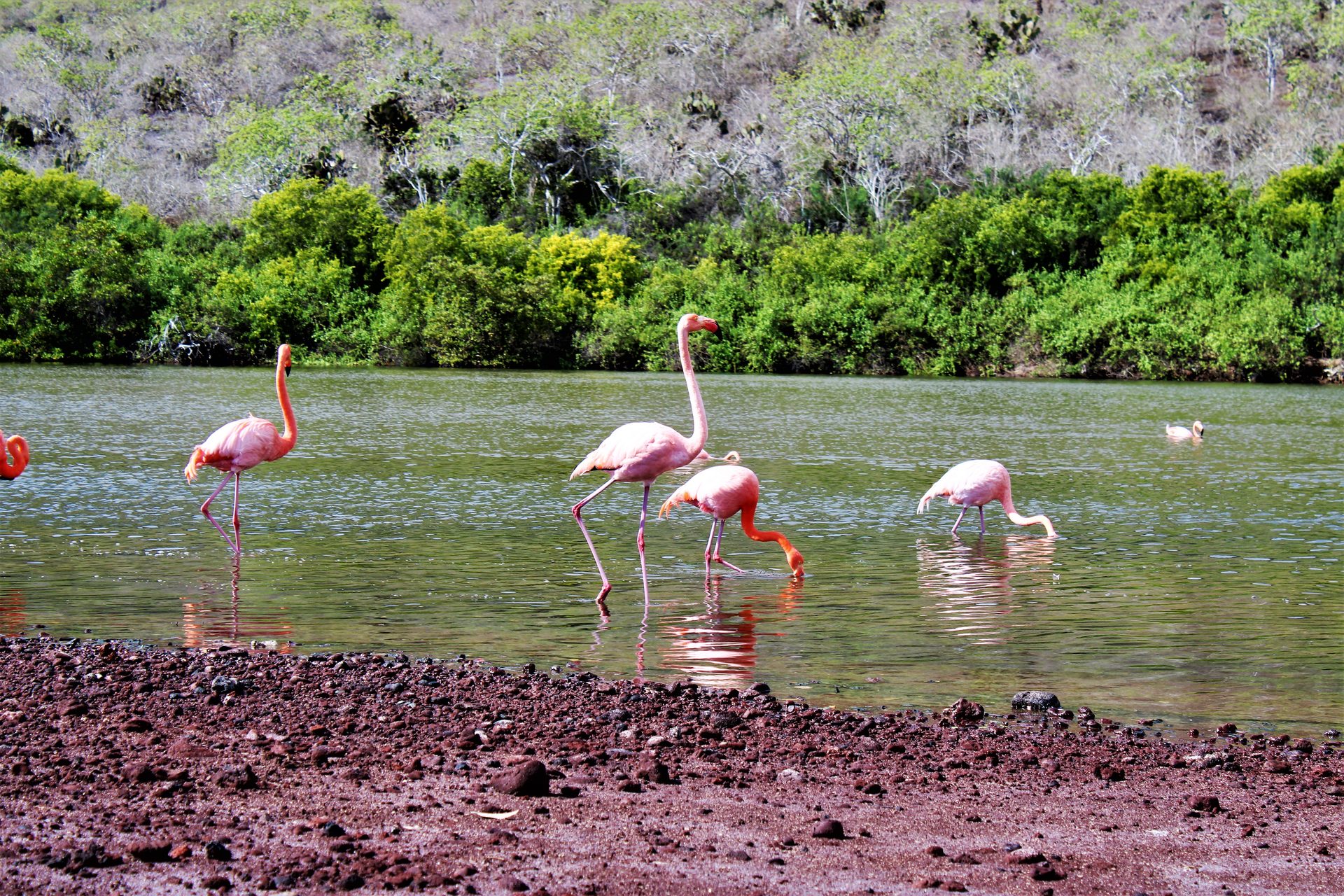
One of the greatest privileges of visiting the Galapagos Islands is the extraordinary wildlife. Unlike anywhere else on Earth, the animals here have evolved with virtually no natural predators and show little to no fear of humans. You don’t observe Galapagos wildlife from a distance — you experience it up close, on their terms. Here are the top animals you will encounter during your Galapagos visit and exactly where to find them.
1. Galapagos Giant Tortoise
The Galapagos Giant Tortoise is the undisputed symbol of the archipelago and one of the longest-lived animals on Earth. These prehistoric giants can weigh up to 400 kilograms and live over 150 years. They were nearly driven to extinction by whalers and pirates in the 18th and 19th centuries, but conservation efforts — including the famous Charles Darwin Research Station — have helped several subspecies recover.
Where to find them: The tortoise reserve at El Chato on Santa Cruz Island is the best place to see wild giant tortoises roaming freely in their natural habitat. You can also visit the breeding center at the Charles Darwin Research Station in Puerto Ayora, or the giant tortoise breeding center on San Cristóbal at the Galapaguera de Cerro Colorado.
2. Marine Iguana
Charles Darwin famously called the Marine Iguana “most disgusting, clumsy lizards” when he first saw them — but he quickly became fascinated. The Galapagos Marine Iguana is the only lizard in the world that feeds in the ocean, diving up to 10 meters to graze on underwater algae. They are extraordinary swimmers and can hold their breath for up to 45 minutes.
Where to find them: Marine iguanas are found on virtually every island in the Galapagos. The largest colonies are on Fernandina Island, Española, and Isabela. In Puerto Baquerizo Moreno (San Cristóbal), you will see them sunbathing on the waterfront promenade right next to cafes and benches.
3. Blue-Footed Booby
The Blue-Footed Booby is one of the most photographed birds in the world, and for good reason. Their impossibly blue feet — the result of pigments obtained from their fish diet — are used in an elaborate courtship dance in which males strut and lift their feet to impress females. If a male’s feet are bright blue, he is healthy and makes a good mate.
Where to find them: Punta Suárez on Española Island is the best nesting site in the Galapagos. Los Lobos Islet near San Cristóbal is also an excellent and easily accessible spot where blue-footed boobies nest right next to the trail.
4. Galapagos Sea Lion
The Galapagos Sea Lion is the unofficial mascot of the islands. Playful, curious, and utterly unafraid of humans, they will swim circles around you underwater, bark at you from their “reserved” benches in town, and sometimes waddle up to your feet on the beach for a closer look. Swimming with sea lions in the Galapagos is consistently ranked as one of the top wildlife experiences in the world.
Where to find them: Sea lions are everywhere in the Galapagos — on the beaches, the docks, the benches, and in the water. La Lobería beach on San Cristóbal is one of the best snorkeling spots to swim with them. Gardner Bay on Española is a spectacular sea lion beach.
5. Galapagos Penguin
The Galapagos Penguin is the only penguin species found north of the equator, and one of the rarest penguins in the world with a population of only around 2,000 individuals. They are small, fast, and absolutely delightful to watch — both on land where they waddle comically, and underwater where they transform into torpedo-like precision hunters.
Where to find them: The highest concentration of Galapagos Penguins is found on Isabela and Fernandina islands. Tagus Cove on Isabela and the rocks near Puerto Villamil are reliable spots. Bartolomé Island also has a resident colony that you can snorkel alongside.
6. Waved Albatross
The Waved Albatross is the largest bird in the Galapagos with a wingspan of up to 2.4 meters. They are extraordinary fliers, capable of traveling thousands of miles over the open ocean using dynamic soaring techniques. Each year from April to December, virtually the entire world population of Waved Albatrosses (around 35,000 pairs) returns to Española Island to breed.
Where to find them: Española Island (Hood Island) is the only nesting site for Waved Albatrosses in the Galapagos. Their courtship ritual — involving synchronized bill-clacking, sky-pointing, and elaborate waddling dances — is one of the most remarkable wildlife spectacles you will ever witness.
7. Frigatebird
The Magnificent Frigatebird and Great Frigatebird are two of the most visually striking birds in the Galapagos. During mating season, male frigatebirds inflate their bright red throat pouches (gular sacs) to the size of a football to attract females. They are aerial pirates — known for stealing food from other birds mid-flight — and can stay airborne for weeks at a time.
Where to find them: North Seymour Island, just north of Baltra, has the largest frigatebird nesting colony in the Galapagos and is a must-visit day trip from Santa Cruz. You can walk within meters of nesting frigatebirds in their natural habitat.
8. Galapagos Sea Turtle
The Galapagos Green Sea Turtle is the only sea turtle species that nests in the Galapagos. These ancient mariners can weigh up to 150 kg and are frequently seen from snorkeling and diving sites throughout the archipelago. Swimming alongside a sea turtle in the crystal-clear Galapagos waters is a moment that stays with you forever.
Where to find them: Sea turtles are found throughout the Galapagos. Las Grietas and Tortuga Bay on Santa Cruz, Kicker Rock near San Cristóbal, and Los Tuneles on Isabela are among the best snorkeling spots where turtle sightings are almost guaranteed.
9. Hammerhead Shark & Whale Shark
The Galapagos is one of the few places in the world where you can reliably encounter both Scalloped Hammerhead Sharks in large schools and the world’s largest fish — the Whale Shark. These encounters are available primarily through live-aboard diving trips to the northern islands of Darwin and Wolf, considered among the top 5 dive destinations on Earth.
Where to find them: Darwin Island and Wolf Island (accessible only by live-aboard cruise) offer the best shark encounters. For whale sharks specifically, the season runs roughly June through November when the Humboldt Current brings cold, nutrient-rich water to the surface.
10. Darwin’s Finches
No visit to the Galapagos would be complete without encountering Darwin’s Finches — the 13 species of finch (plus one in Cocos Island) that inspired Charles Darwin’s theory of natural selection. Each species has evolved a different beak shape and size adapted to exploit a specific food source, from cactus seeds to insect larvae to blood (yes, the Vampire Finch of Wolf Island really does drink blood).
Where to find them: Darwin’s Finches are found on every island in the Galapagos. The Charles Darwin Research Station on Santa Cruz has informative exhibits, and the birds are so tame they will often land on your hat or camera in search of crumbs.
Frequently Asked Questions
The Galápagos Giant Tortoise, Marine Iguana, Blue-Footed Booby, Galápagos Sea Lion, Galápagos Penguin, Waved Albatross, Frigatebird, Sea Turtle, Hammerhead and Whale Sharks, and Darwin’s Finches are the top wildlife encounters.
The tortoise reserve at El Chato on Santa Cruz Island is the best place to see wild giant tortoises.
No — Galápagos animals evolved with virtually no natural predators and show little to no fear of humans, allowing visitors to observe them safely up close.
See These Animals with GalaApp
Ready to meet these extraordinary creatures in person? GalaApp is a locally-owned Galapagos travel agency with deep knowledge of every wildlife hotspot in the archipelago. We offer guided island tours, Galapagos cruises, and custom itineraries designed to maximize your wildlife encounters. Contact us today to start planning your dream trip.
See These Animals in Person
Book a Galápagos wildlife tour with expert naturalist guides who know exactly where to spot each species.
